
Choosing a flour mill for your home involves more than comparing motor power or machine size. The grinding mechanism, construction, capacity, maintenance requirements, and types of grains you plan to process all influence which machine may suit your household.
A stone flour mill is an option for households that prefer grinding suitable grains at home. When comparing a domestic stone flour mill with other flour grinding machines, it is important to understand how stone grinding works, what affects grinding performance, and which features deserve attention before purchasing.
Whether you are exploring a home atta chakki for everyday wheat grinding or a stainless steel stone flour mill for processing different compatible grains, understanding these factors can help you make a more informed decision.
What Is a Stone Flour Mill and How Does It Work?
A stone flour mill is a grinding machine that uses abrasive grinding stones to process suitable grains into flour.
During operation, grains pass through the grinding area, where the interaction between the grinding surfaces reduces them into smaller particles. The resulting flour texture depends on several factors, including the grain type, stone characteristics, machine settings, and operating conditions.
Stone flour mills are available in different configurations for household and commercial applications. Domestic models are designed around household grinding requirements, while larger machines may be intended for higher production volumes.
Before selecting a stone grinding machine, consider your expected usage, preferred flour texture, and the grains you want to process.
Why Consider a Domestic Stone Flour Mill for Your Home?
Households have different flour preparation requirements. Some primarily grind wheat, while others may want to process additional compatible grains according to their dietary and cooking preferences.
A domestic stone flour mill can be worth considering for several reasons.
1. Convenient Home Grain Grinding
Having a flour mill at home allows households to process suitable grains according to their own schedule rather than relying entirely on externally purchased flour.
The convenience depends on available space, how frequently the machine is used, and the time required for each grinding session.
2. Control Over Grain Selection
Grinding at home allows users to choose the grains they purchase and decide which compatible grains they want to process.
Depending on the machine's capabilities, these may include wheat and other suitable grains. Always check the manufacturer's recommendations before grinding materials other than those specified for the machine.
3. A Practical Option for Regular Flour Preparation
For households that regularly prepare wheat flour, a domestic atta chakki can provide a convenient way to incorporate grain grinding into their kitchen routine.
The appropriate machine depends on household consumption, available space, desired grinding output, and operating requirements.
4. Understanding the Grinding Process
Different grinding mechanisms can produce different flour characteristics. If you are specifically interested in stone grinding, reviewing the machine's grinding stones, operating conditions, and recommended applications can help you understand whether it meets your preferences.
Stone grinding alone does not guarantee a particular nutritional profile or flour quality. The grain, grinding conditions, and handling of the finished flour also matter.
What Should You Check Before Buying a Stainless Steel Stone Flour Mill?
Choosing the right domestic stone flour mill requires a closer look at its design and intended use.
Motor Power and Grinding Requirements
Motor power is one factor affecting a flour mill's operation, but it should not be considered in isolation.
Check the motor rating alongside the stated grinding capacity, recommended operating duration, grain type, and machine specifications.
A machine should be selected according to your actual grinding requirements rather than simply choosing the highest motor rating.
Grinding Stone Size and Construction
The grinding stones are central to a stone flour mill's operation.
Before purchasing, review the stone material, dimensions, maintenance requirements, and suitability for your intended grinding applications.
Also ask the manufacturer about the recommended inspection and replacement procedures for the grinding components.
Stainless Steel Body
A stainless steel body can be an important consideration when evaluating machine construction, cleaning, and routine maintenance.
Check the actual material specification, the design of the food-contact areas, and the manufacturer's cleaning instructions rather than assuming that every component is made from the same grade of stainless steel.
Grinding Capacity
Grinding capacity helps determine how much material a machine can process over a given period.
For a domestic flour mill, the required output depends on household consumption and the frequency of use.
When comparing machines, confirm the manufacturer's stated capacity and ask whether the figure varies with grain type, operating conditions, or the desired flour texture.
Machine Dimensions and Available Space
A flour mill should fit comfortably within the intended installation area.
Check the machine's dimensions, operating clearance, electrical requirements, ventilation needs, and the space required for loading grains and collecting flour.
These considerations are especially important when installing a machine in a household kitchen or a dedicated utility area.
Cleaning and Maintenance
Regular cleaning and appropriate maintenance help keep a flour mill in suitable working condition.
Follow the manufacturer's instructions for cleaning, inspection, and servicing. Pay particular attention to the grinding area, grain-contact components, and any parts that require periodic adjustment or replacement.
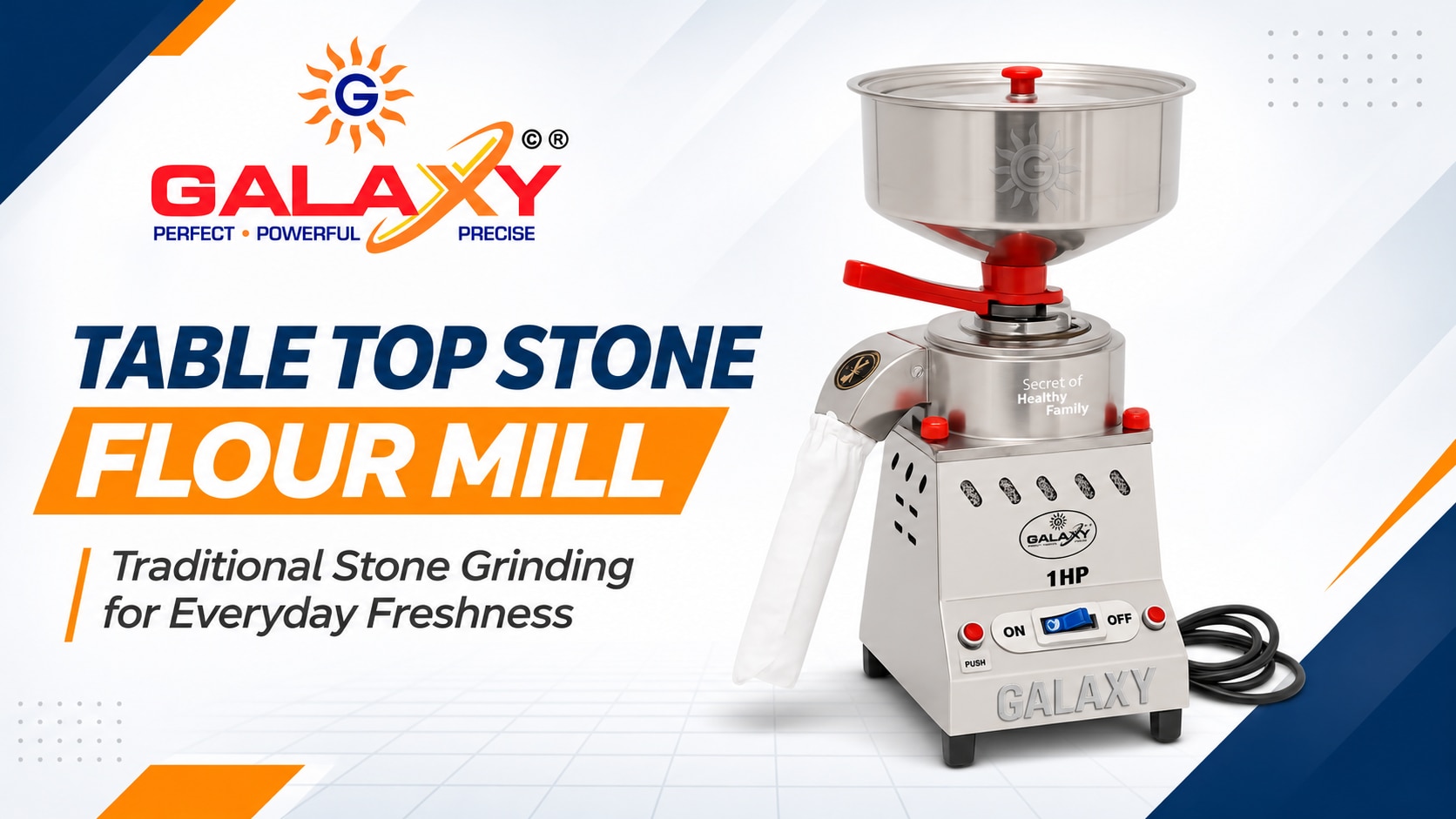
Meet the GALAXY 1HP S.S. Square Stone Flour Mill
GALAXY Flour Mill & Food Processing Machinery offers flour milling and food processing machinery for different applications.
The GALAXY 1HP S.S. Square Stone Flour Mill is a domestic flour grinding machine designed for households considering a compact stainless steel stone grinding configuration.
According to the supplied product specifications, this model features:
A 1 HP motor.
A square stainless steel body.
Machine dimensions of 12 × 11 × 19 inches.
A stated grinding capacity of approximately 6–7 kg per hour.
An emery grinding stone measuring 150 mm (6 inches) in diameter.
A listed operating speed of 1,440 RPM.
A stated machine weight of approximately 25 kg.
These specifications provide a starting point for comparing the machine with your household requirements. Actual grinding output may vary according to grain type, operating conditions, and the flour texture being produced.
Before purchasing, confirm the product specifications, electrical requirements, recommended operating duration, cleaning procedure, and suitability for the grains you intend to process.
For households looking for a domestic stone flour mill, evaluating these details can help determine whether this configuration is appropriate for everyday use.
Which Grains Can You Grind in a Domestic Stone Flour Mill?
The grains suitable for a particular flour mill depend on its design and the manufacturer's recommendations.
Wheat is a common grain processed in domestic flour mills. Depending on the machine's intended applications, other suitable grains may also be processed.
Examples may include:
Wheat.
Rice.
Sorghum (jowar).
Pearl millet (bajra).
Maize.
Other compatible dry grains.
Not every machine is suitable for every grain or material. Before processing a different grain, confirm its compatibility with the manufacturer and follow the recommended preparation and operating instructions.
If you intend to grind multiple grain types, also ask about cleaning procedures between batches to minimise unwanted mixing of residual flour.
Stone Flour Mill vs Other Domestic Flour Mills
When comparing a stone flour mill with other domestic flour grinding machines, focus on the grinding mechanism and the practical requirements of your household.
A stone flour mill uses grinding stones to reduce grains into flour. Other flour mill designs may use different grinding mechanisms, depending on the product configuration.
The differences that matter most to buyers include:
The desired flour texture.
Compatibility with different grains.
Grinding capacity.
Cleaning and maintenance requirements.
Machine dimensions and installation needs.
Operating conditions and electricity requirements.
There is no single grinding mechanism that is automatically best for every household. The right choice depends on your preferences, the materials you intend to process, and the machine's verified specifications.
How to Maintain Your Home Stone Flour Mill
Appropriate maintenance can help preserve the machine's operating condition and support reliable everyday use.
Follow these practical guidelines:
Switch off and disconnect the machine before carrying out cleaning or maintenance.
Clean the machine according to the manufacturer's instructions.
Prevent moisture from entering components that must remain dry.
Inspect the grinding stones and other relevant components at the recommended intervals.
Avoid overloading the machine beyond its specified operating limits.
Arrange servicing when unusual noise, vibration, or a change in performance occurs.
Follow the manufacturer's instructions for adjustments, replacement parts, and safe operation.
Never reach into the grinding area while the machine is connected to power. Allow moving components to stop completely before carrying out any inspection permitted by the manufacturer.
Conclusion
Choosing a domestic stone flour mill involves understanding your household's grinding requirements, preferred flour texture, available installation space, and the machine's recommended applications.
Before purchasing a home atta chakki, compare motor power, grinding stone specifications, stated capacity, construction, cleaning requirements, and maintenance support.
The GALAXY 1HP S.S. Square Stone Flour Mill is an option to evaluate if you are looking for a domestic machine with a stainless steel body and stone grinding configuration.
Review the verified specifications and confirm that the machine suits your intended grains and daily usage. A well-informed selection can help you choose equipment that fits your household's flour preparation routine.
Frequently Asked Questions (FAQs)
1. What is a domestic stone flour mill?
A domestic stone flour mill is a household grinding machine that uses grinding stones to process suitable grains into flour.
2. Is a stone flour mill suitable for home use?
It can be suitable for households that regularly grind grains at home. The right choice depends on daily requirements, available space, preferred flour texture, and the machine's specifications.
3. What should I check before buying a stone flour mill?
Review the motor power, grinding stone specifications, stated capacity, body construction, dimensions, cleaning requirements, warranty, and manufacturer support.
4. What is the difference between a stone flour mill and a regular atta chakki?
The main difference may be the grinding mechanism and machine configuration. Compare the actual grinding system, intended applications, flour characteristics, and operating requirements before choosing.
5. Which grains can be processed in a domestic stone flour mill?
Wheat and other compatible grains may be suitable, depending on the machine. Check the manufacturer's recommendations before processing rice, millet, maize, or other materials.
6. What is the grinding capacity of the GALAXY 1HP S.S. Square Stone Flour Mill?
The supplied specifications state an approximate grinding capacity of 6–7 kg per hour. Actual output can vary with grain type, operating conditions, and the desired flour texture.
7. What is the grinding stone size of this GALAXY flour mill?
The supplied product information lists an emery grinding stone measuring 150 mm, equivalent to approximately 6 inches, in diameter.
8. Is a stainless steel flour mill easy to maintain?
Maintenance depends on the machine's design, construction, and operating conditions. Follow the manufacturer's cleaning and servicing instructions to keep the machine in suitable working condition.
9. Can a stone flour mill grind rice and millet?
Some machines may support these grains, but suitability depends on the specific grinding system and manufacturer recommendations. Confirm compatibility before use.
10. How often should a stone flour mill be serviced?
The appropriate service interval depends on the machine's design, usage, and operating conditions. Follow the manufacturer's recommended maintenance schedule.
11. How do I choose the right flour mill capacity for my family?
Estimate your household's flour consumption and consider how frequently you plan to grind. Compare this requirement with the machine's stated output and recommended operating duration.
12. Where can I find a stone flour mill manufacturer in Rajkot, Gujarat?
GALAXY Flour Mill & Food Processing Machinery is based in Rajkot, Gujarat, India. You can contact the company to enquire about its stone flour mill range, specifications, and suitability for your household requirements.