
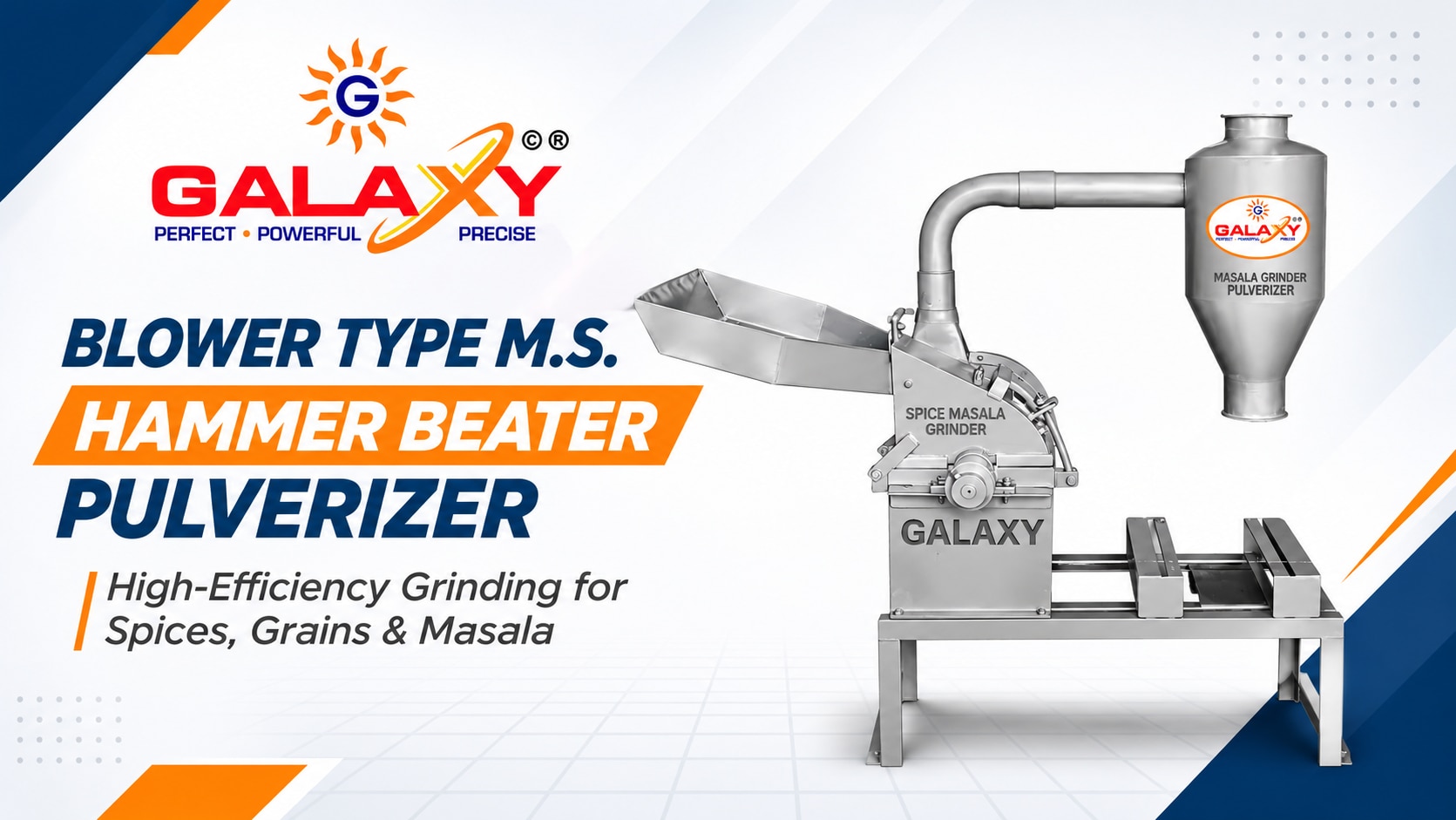
Starting or expanding a grinding business requires more than simply purchasing a machine. Businesses involved in spice processing, masala manufacturing, and dry powder production need equipment that matches their material requirements, production targets, and available workspace.
One important decision is choosing the right pulverizer configuration. While some grinding machines come with an integrated motor, others are supplied without a motor and require a separately arranged motor according to the manufacturer's recommendations.
A blower type hammer beater pulverizer without motor can be an option for businesses planning their own grinding setup. However, understanding the motor requirement, grinding chamber, blower arrangement, material compatibility, and production capacity is essential before making a purchase.
Let's explore how this type of pulverizer works, where it can be used, and what buyers should consider when selecting commercial grinding machinery.
What Is a Pulverizer Machine Without Motor?
A pulverizer machine without motor is a grinding unit supplied without an integrated motor. The required motor is arranged separately and connected according to the machine's recommended configuration.
This arrangement may be considered by businesses that want to plan their motor installation according to their available electrical setup and machinery requirements.
However, a motor-less pulverizer does not mean that the machine operates without a motor. The correct motor power, mounting arrangement, RPM, belt configuration, and electrical requirements must be confirmed before installation.
For example, the GALAXY 8×4 Blower Type M.S. Hammer Beater Pulverizer is designed with a stated motor requirement of 2 HP.
Understanding the Blower Type Hammer Beater Pulverizer
A hammer beater pulverizer uses rotating grinding components to break suitable materials into smaller particles.
In a blower type configuration, an air-handling arrangement assists in moving processed material through the system, depending on the machine design.
This configuration can be useful for businesses that require a grinding arrangement for compatible dry materials.
The grinding process generally involves the following stages:
Suitable dry material is prepared for feeding.
The material enters the grinding chamber through the feeding arrangement.
Rotating hammer beaters help reduce the material into smaller particles.
The processed material moves through the machine's discharge arrangement.
The ground material is collected for further handling or packaging.
The actual grinding process and material movement depend on the machine's internal configuration.
Why Is Motor Selection Important in a Without Motor Pulverizer?
Motor selection is one of the most important considerations when purchasing a pulverizer without motor.
Since the motor is arranged separately, buyers need to ensure that the selected motor matches the manufacturer's recommended requirements.
An unsuitable motor configuration may affect machine operation, grinding performance, and equipment reliability.
Before installation, consider these factors:
Recommended motor power.
Motor RPM and operating speed.
Electrical phase and supply requirements.
Motor mounting arrangement.
Pulley and belt compatibility, where applicable.
Alignment and installation requirements.
Recommended safety protection.
For the GALAXY 8×4 Blower Type M.S. Hammer Beater Pulverizer, the specified motor requirement is 2 HP.
Always confirm the compatible motor configuration with the manufacturer before purchasing or installing the machine.
What Makes a Blower Type Pulverizer Different?
Blower type pulverizers incorporate a blower arrangement into their material handling system.
This arrangement can assist in transferring processed material towards the designated collection point.
When comparing a blower type pulverizer with other grinding configurations, buyers should understand the complete machine design rather than judging only by its external appearance.
Important factors include:
Material Movement
The blower arrangement supports material movement through the designed discharge system.
Collection Arrangement
The collection setup should be evaluated according to the processed material and intended production workflow.
Grinding Configuration
The hammer beater arrangement, grinding chamber, and screen configuration influence the grinding process.
Installation Requirements
The machine should be installed with suitable space for the pulverizer, motor, collection arrangement, and operator access.
What Is the Importance of Grinding Chamber Size?
The grinding chamber is one of the important components of a hammer beater pulverizer.
Its dimensions and internal configuration influence the material processing arrangement.
A suitable grinding chamber should be evaluated according to:
Type of material being processed.
Material feeding requirements.
Desired powder fineness.
Expected production output.
Screen configuration.
Cleaning and maintenance accessibility.
The GALAXY 8×4 model comes with a grinding chamber measuring 8 × 4 inches.
Buyers should consider this specification alongside the material characteristics and required grinding output.
Which Materials Can Be Processed in a Hammer Beater Pulverizer?
Hammer beater pulverizers are used for different dry material grinding applications, depending on their design and configuration.
Potential applications may include:
Dry red chilli grinding.
Turmeric grinding.
Coriander seed processing.
Cumin seed grinding.
Selected dry spices.
Compatible dry food ingredients.
Other suitable dry materials.
Not every material is suitable for every pulverizer.
Hardness, moisture, oil content, feeding characteristics, and desired powder fineness can influence the grinding process.
Before processing a new material, confirm its compatibility with the manufacturer.
Why Is Grinding Capacity Important for Commercial Businesses?
Grinding capacity is an important consideration for businesses planning their daily production.
A machine's stated hourly output helps buyers estimate whether the equipment can support their expected workload.
However, actual output may vary depending on:
Material hardness.
Material moisture.
Required powder fineness.
Feeding consistency.
Screen configuration.
Operating conditions.
The GALAXY 8×4 Blower Type Hammer Beater Pulverizer has a stated grinding capacity of approximately 40–50 kg per hour.
This capacity should be considered as a reference based on the supplied product specifications. Actual results may vary depending on the grinding application.
Why Consider an M.S. Pulverizer for Commercial Grinding?
Mild steel is commonly used in the construction of industrial and commercial machinery.
An M.S. pulverizer may be considered by businesses evaluating grinding equipment for suitable dry material processing.
Some important factors to evaluate include:
Machine Construction
Check the overall frame, chamber construction, material thickness, and component quality.
Maintenance Requirements
Regular inspection and maintenance are important for machinery used in repeated grinding operations.
Installation Flexibility
A without motor configuration allows the motor arrangement to be planned separately, subject to the manufacturer's installation requirements.
Application Suitability
The machine should be selected according to the type of material, required output, and intended working conditions.
Introducing the GALAXY 8×4 Blower Type M.S. Hammer Beater Pulverizer
GALAXY Flour Mill & Food Processing Machinery manufactures different types of grinding and food processing equipment for commercial and industrial applications.
The GALAXY 8×4 Blower Type M.S. Hammer Beater Pulverizer is a machine designed for businesses looking for a dry material grinding solution with a separately arranged motor.
According to the supplied product specifications, this model offers:
2 HP recommended motor requirement.
Semi-automatic operating configuration.
8 × 4 inches grinding chamber.
Approximate grinding capacity of 40–50 kg per hour.
15 kg hopper capacity.
Mild steel body construction.
Blower type configuration.
Hammer beater grinding mechanism.
Machine dimensions of 20 × 12 × 30 inches.
Approximate machine weight of 80 kg.
Its configuration makes it an option for businesses comparing without motor pulverizer machines for their grinding requirements.
The motor is not included in the without motor configuration. Buyers should arrange a compatible motor according to the manufacturer's specifications.
Before purchasing, confirm the motor mounting arrangement, operating RPM, electrical requirements, blower configuration, and material compatibility.
Which Businesses Can Consider a Blower Type Pulverizer?
A suitable blower type hammer beater pulverizer may be relevant to several businesses involved in dry material processing.
1. Masala Manufacturing Businesses
Masala manufacturers require appropriate grinding equipment for processing compatible dry spices and ingredients.
A suitable hammer beater pulverizer can form part of their spice processing setup.
2. Spice Processing Units
Businesses processing dry chilli, coriander, cumin, turmeric, and other compatible spices may consider this type of grinding equipment.
3. Commercial Grinding Businesses
Grinding service providers can evaluate pulverizer capacity, motor requirements, and material compatibility according to their daily customer requirements.
4. Small and Medium Food Processing Units
Food processing businesses planning a dedicated dry grinding section may consider a suitable M.S. pulverizer according to their production needs.
5. Hotels and Catering Operations
Commercial kitchens and catering businesses with regular dry ingredient processing requirements may evaluate suitable grinding machinery for their operations.
Blower Type Pulverizer vs. Other Pulverizer Configurations
Different pulverizer configurations are designed for different processing requirements.
Before selecting equipment, understand the differences between common machine types.
Blower Type Pulverizer: Includes a blower arrangement designed to assist with material movement through the machine's discharge system.
Hammer Beater Pulverizer: Uses hammer beaters to break suitable materials into smaller particles.
Without Motor Pulverizer: Supplied without an integrated motor and requires a separately arranged compatible motor.
SS Pulverizer: Uses stainless steel construction for specified machine components or body sections, depending on the model.
These categories can overlap. For example, a machine can be both a blower type and a hammer beater pulverizer supplied without a motor.
Therefore, buyers should compare the complete machine configuration rather than treating these descriptions as mutually exclusive machine types.
Common Mistakes to Avoid When Buying a Pulverizer Without Motor
Purchasing a machine without understanding its installation requirements can create unnecessary complications.
Here are some common mistakes to avoid:
1. Selecting an Incorrect Motor
Always follow the recommended motor power, RPM, and mounting requirements.
2. Ignoring Electrical Compatibility
Check the electrical supply and motor phase requirements before installation.
3. Overlooking the Blower Arrangement
Understand the blower system, material discharge, and collection arrangement.
4. Comparing Only Grinding Capacity
The actual output depends on material characteristics and grinding requirements.
5. Not Checking Material Compatibility
Confirm whether your intended dry materials are suitable for the machine.
6. Ignoring Maintenance Requirements
Understand the cleaning, inspection, and servicing procedures before regular operation.
Conclusion
Choosing a suitable blower type hammer beater pulverizer requires understanding more than just motor power and grinding capacity.
Motor compatibility, grinding chamber dimensions, blower arrangement, machine construction, material suitability, and installation requirements all play important roles in selecting the right equipment.
The GALAXY 8×4 Blower Type M.S. Hammer Beater Pulverizer offers a without motor configuration with a specified 2 HP motor requirement, 8 × 4 inches grinding chamber, and stated grinding capacity of 40–50 kg per hour.
For businesses involved in commercial masala grinding, spice processing, and other compatible dry material applications, evaluating these specifications can help determine whether the machine matches their production requirements.
A well-planned grinding setup starts with selecting suitable machinery and ensuring that every component works according to the manufacturer's recommendations.
Frequently Asked Questions (FAQs)
1. What is a pulverizer machine without motor?
A pulverizer without motor is a grinding machine supplied without an integrated motor. A compatible motor must be arranged separately according to the manufacturer's recommendations.
2. What is a blower type hammer beater pulverizer?
It is a grinding machine that uses hammer beaters to reduce suitable materials into smaller particles and incorporates a blower arrangement to assist material movement through the designed discharge system.
3. Which motor is required for the GALAXY 8×4 without motor pulverizer?
The supplied product specifications recommend a 2 HP motor. The exact motor configuration and installation requirements should be confirmed with GALAXY.
4. What is the grinding capacity of the GALAXY 8×4 pulverizer?
The stated grinding capacity is approximately 40–50 kg per hour. Actual output depends on material characteristics, powder fineness, and operating conditions.
5. What is the difference between a blower type and a normal pulverizer?
A blower type pulverizer incorporates a blower arrangement to assist material movement through its discharge system. Other pulverizers may use different material discharge configurations.
6. Can a hammer beater pulverizer grind spices?
Yes, suitable hammer beater pulverizers can process compatible dry spices. Material suitability depends on hardness, moisture, oil content, and machine configuration.
7. Is an M.S. pulverizer suitable for commercial grinding?
An M.S. pulverizer may be suitable for commercial grinding applications when its construction, configuration, and operating capacity match the intended requirements.
8. What is the hopper capacity of the GALAXY 8×4 model?
According to the supplied specifications, the hopper capacity is 15 kg.
9. What is the advantage of buying a pulverizer without motor?
A without motor configuration allows businesses to arrange a compatible motor separately according to the manufacturer's specifications and their installation requirements.
10. What materials can be ground in a blower type pulverizer?
Depending on its design, it may process compatible dry spices, chilli, turmeric, coriander, cumin, and other suitable dry materials.
11. What should I check before installing a pulverizer without motor?
Check motor power, RPM, electrical phase, mounting arrangement, pulley compatibility, belt alignment, blower installation, and safety requirements.
12. Where can I find an M.S. pulverizer manufacturer in Rajkot?
GALAXY Flour Mill & Food Processing Machinery is based in Rajkot, Gujarat, India. The company manufactures different grinding and food processing machines, including pulverizers.